
Lifestyle
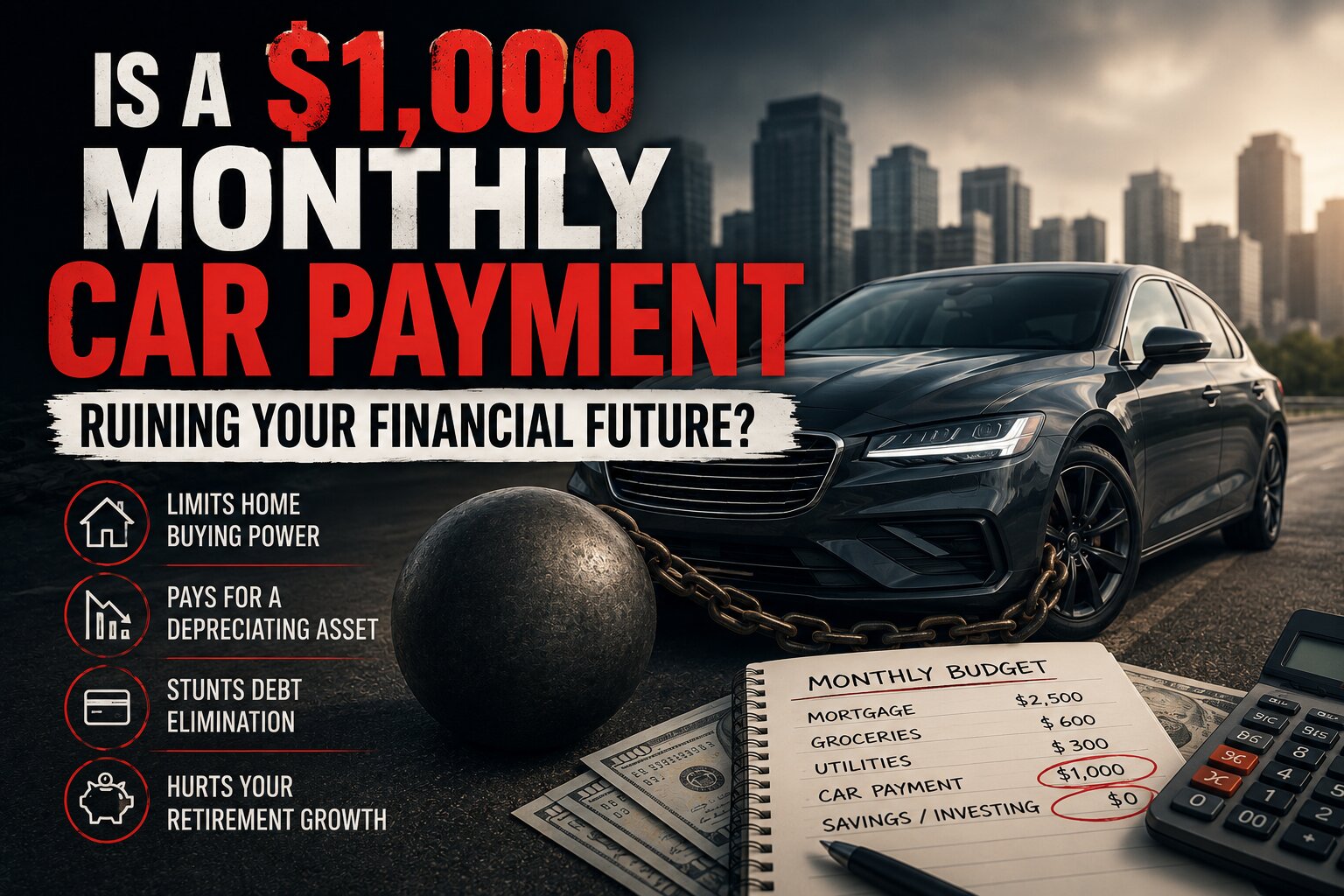
Is a $1,000 Monthly Car Payment Ruining Your Financial Future?
Introduction
Securing the keys to a brand-new vehicle used to be a milestone celebrated with financial pride. However, an alarming shift in the automotive market has transformed vehicle ownership into a wealth-draining anchor for millions of households. If your auto loan statement features a comma, you are likely participating in a dangerous economic trend that threatens your long-term financial stability. Taking on a $1,000 monthly car payment has rapidly shifted from a luxury anomaly to a common reality for everyday consumers.
This growing financial burden is quietly eroding the ability of average families to build legacy wealth, invest for the future, or achieve true financial independence. Many consumers are also rethinking how they spend beyond major purchases. Explore why literary chic is becoming one of 2026’s fastest-growing lifestyle trends, as more people embrace affordable hobbies and intentional living.
Understanding the mechanics of this debt trap is the first step toward reclaiming your monthly cash flow.
The Rising Tide of Four-Digit Auto Loans
The financial landscape of vehicle purchasing has undergone a massive transformation. The average financed price for a new vehicle has scaled unprecedented heights, pushing past the $44,000 threshold. Consequently, a staggering one in five new-car buyers now signs up for a $1,000 monthly car payment, according to automotive data from Edmunds.
This trend is not isolated to luxury buyers. The used-car market is experiencing a similar inflation shock, with the average financed amount for pre-owned vehicles surpassing $30,000. As a result, a record percentage of used-car buyers are also saddled with four-digit monthly commitments. With promotional zero-percent financing offers virtually extinct, consumers face steep interest rates averaging 7% for new cars and over 10.5% for used vehicles. To make these expensive purchases fit within a monthly budget, borrowers frequently extend their loan terms to an astonishing 84 months.
How Negative Equity Fuels the Debt Cycle
Many consumers assume that a $1,000 monthly car payment only happens when someone purchases a high-end sports car or a massive premium SUV. In reality, the primary driver behind these inflated loans is the vicious cycle of negative equity.
What is Negative Equity?
Negative equity, often referred to as being “underwater” or “upside-down,” occurs when a vehicle owner owes more on their auto loan than the vehicle is actually worth.
When drivers decide to trade in their current vehicle before fully paying off the existing loan, they rarely pay off the difference out of pocket. Instead, dealerships seamlessly roll that lingering debt into the new loan. The average amount owed on underwater trade-ins has climbed to an alarming $7,183. Because many of these traded vehicles were originally purchased during periods of peak pandemic-era inflation, their market values have dropped sharply while the loans remain high. Consequently, experts note that rolling negative equity into a new purchase guarantees a near 90% chance of ending up with a four-digit monthly bill.
Five Ways a Heavy Auto Loan Sabotages Your Budget
Allocating such a massive portion of your income to a vehicle creates a cascade of financial challenges. Here are five critical areas where a $1,000 monthly car payment actively damages your financial well-being.
1. It Severely Limits Your Home Buying Power
Mortgage lenders utilize a metric called the Debt-to-Income (DTI) ratio to evaluate your capacity for a mortgage. This ratio compares your recurring monthly liabilities against your gross monthly income. A major car payment heavily inflates this ratio, which can easily disqualify you from purchasing a home or force you into a significantly higher interest rate tier. Because lenders evaluate gross income rather than your actual take-home pay, the real-world squeeze on your monthly cash flow is much tighter than it appears on paper.
2. You Allocate Capital to a Rapidly Depreciating Asset
Vehicles are notoriously depreciating assets, losing value the moment they leave the dealership lot. Dedicating $1,000 every month to an asset that actively loses value mimics the cost of actual housing without any of the long-term appreciation benefits. Furthermore, high-interest loans ensure that your initial payments primarily cover interest charges rather than reducing the principal. If you choose to trade the vehicle in after only a few years, you will not have paid down enough principal to outrun the steep depreciation curve.
3. It Completely Violates the 10 Percent Rule
Financial experts generally recommend that a monthly auto loan payment should never exceed 10% of your take-home pay. To comfortably manage a $1,000 monthly car payment under these healthy parameters, a household needs a net monthly income of roughly $10,000, which equates to an annual salary of approximately $120,000. If your household earnings fall below this threshold, you are overextending your budget and putting your financial safety net at risk.
4. It Prevents Aggressive Debt Elimination
Carrying high-interest credit card balances or sizable student loans requires focused financial aggression to eliminate. Redirecting $1,000 a month toward the principal of those high-interest balances could wipe out thousands of dollars in debt within a matter of months. When that capital is tied up in a vehicle, your ability to free up cash flow vanishes, trapping you in a continuous loop of minimum payments.
5. It Stunts Your Long-Term Retirement Growth
The opportunity cost of an expensive vehicle payment is immense when projected over decades of investing. Diverting even half of a four-digit car payment into a diversified retirement account drastically alters your future net worth.
| Monthly Investment | Annual Return Rate | Total Value After 10 Years | Total Value After 20 Years |
| $500 | 8% | ~$92,000 | ~$294,000 |
| $1,000 | 8% | ~$184,000 | ~$588,000 |
As the table illustrates, compounding interest turns that monthly car expense into a massive amount of missed wealth.
Breaking Free from the Vehicle Financing Trap
The most effective strategy to avoid a $1,000 monthly car payment is to commit to driving your current vehicle for as long as possible. Once your existing loan is fully paid off, discipline yourself to route that same payment amount into a dedicated high-yield savings account.
Holding onto a vehicle for an extended period means you will eventually encounter maintenance costs. Long-term ownership also depends on access to qualified repair professionals. Our article on the technician shortage threatening auto dealerships explains how the growing shortage of skilled mechanics could affect vehicle maintenance and repair in the years ahead. While a $1,500 repair bill can feel frustrating, it represents a one-time expense. Mathematically, paying for two major repairs a year remains vastly cheaper than committing to a continuous $12,000 annual obligation for six or seven years. By accumulating cash over several years, you gain the financial leverage to walk into a dealership and buy your next vehicle outright. Eliminating the lender is how you protect your cash flow and build genuine, lasting wealth.
FAQ
Is a $1,000 monthly car payment normal?
While it is becoming increasingly common due to rising vehicle prices, high interest rates, and rolled-over negative equity, it is not financially healthy for the average household. It significantly exceeds standard budgeting guidelines unless your annual household take-home income is well over $120,000.
How does rolling over negative equity affect my car payment?
When you roll over negative equity, the unpaid balance of your previous vehicle is added directly to your new loan. This increases the total amount financed well beyond the actual value of the new car, driving up both your monthly obligation and the total interest you will pay.
What is the maximum percentage of income that should go to a car payment?
According to general financial planning rules, an auto loan payment should not exceed 10% of your net, take-home monthly income. Total vehicle expenses, including insurance, fuel, and maintenance, should stay below 15% to 20% of your net pay.
Conclusion
A $1,000 monthly car payment has quickly become a significant barrier to wealth creation for many consumers. Between skyrocketing transaction prices, elevated interest rates, and extended loan terms, buyers are consistently overextending their finances for an asset that depreciates rapidly. By understanding the true impact of negative equity and the massive opportunity cost of delayed investing, you can make informed purchasing decisions. Choosing to break the endless cycle of vehicle debt by driving older cars and paying with cash is one of the most powerful moves you can make to secure your financial freedom.
Source: The Washington Post. Read the original article here: Is a $1,000 Monthly Car Payment Ruining Your Financial Future?
